Threat Hunting - Cyberyami
The Threat Hunting program you have outlined represents a comprehensive, end-to-end framework for proactively identifying, analyzing, and mitigating advanced cyber threats across the entire attack lifecycle. It begins with foundational concepts such as the definition, scope, mindset, lifecycle, and operational integration of threat hunting within a Security Operations Center (SOC). This foundation establishes hunting as a hypothesis-driven, intelligence-informed activity that complements traditional detection systems by actively searching for hidden adversaries rather than waiting for alerts. The methodology section builds on this by introducing structured hunting approaches—hypothesis-driven, intelligence-driven, and anomaly-driven—while aligning investigations with adversary models such as the MITRE ATT&CK framework, the Kill Chain, and the Diamond Model. It also emphasizes measurable performance through defined metrics and KPIs, including ATT&CK coverage, dwell time reduction, and detection improvement impact.
As the program progresses, it transitions into tactical hunting across the attacker lifecycle, beginning with foothold and initial access techniques such as phishing, exploitation of public-facing services, credential misuse, and execution abuse through scripts and living-off-the-land binaries. It then expands into deeper adversary behaviors including defense evasion, persistence mechanisms, command-and-control communication, lateral movement, privilege escalation, credential dumping, reconnaissance, and data exfiltration. The endgame phase focuses on identifying attacker objectives, destructive actions, and impact indicators, while integrating hunt findings into incident response, detection engineering, and playbook refinement. Finally, the program is supported by a strong tooling and visibility layer—leveraging SIEM platforms such as Splunk, endpoint telemetry, network and cloud logs, advanced query languages, and threat intelligence feeds—ensuring that hunts are data-driven, repeatable, and continuously improving. Overall, this structure defines a mature, intelligence-led threat hunting capability that transforms a reactive SOC into a proactive, behavior-focused security operation capable of detecting sophisticated and stealthy adversaries.
intermediate
7 Days Free Access

Course Overview
This Threat Hunting Course is designed as a complete, enterprise-grade program that transforms learners from reactive SOC analysts into proactive, intelligence-driven threat hunters. The course begins with foundational principles, introducing the definition, scope, lifecycle, and mindset required for effective hunting. Learners understand how threat hunting differs from traditional alert-based detection and how it integrates with SOC operations, incident response, and detection engineering. Core concepts such as IOCs, IOAs, TTPs, telemetry analysis, hypothesis development, and adversary modeling are introduced early to build strong analytical thinking and attacker-focused reasoning.
As the course progresses, students learn structured hunting methodologies, including hypothesis-driven, intelligence-driven, and anomaly-based approaches. The program aligns hunting activities with adversary frameworks such as the MITRE ATT&CK framework, enabling learners to map attacker tactics to real telemetry and detection gaps. Participants are trained to build effective hypotheses, measure hunt effectiveness using KPIs, evaluate ATT&CK coverage, and continuously improve detection maturity within an organization.
The middle phase of the course focuses on practical adversary behavior hunting across the full attack lifecycle. Students investigate initial access techniques like phishing and brute force attacks, execution abuse using scripts and living-off-the-land binaries, persistence mechanisms, defense evasion tactics, command-and-control patterns, lateral movement, credential dumping, privilege escalation, and data exfiltration indicators. Emphasis is placed on correlating logs across endpoints, network telemetry, identity systems, and cloud environments to reconstruct attack chains and uncover stealthy activity.
In the advanced phase, learners integrate threat intelligence into hypothesis building, perform multi-source log correlation, and convert hunt findings into detection rules and playbooks. They gain hands-on exposure to SIEM platforms such as Splunk, endpoint telemetry tools, query languages like KQL and SPL, and behavioral analysis techniques. The course concludes by teaching documentation standards, reusable hunt playbooks, reporting structures, and how to operationalize hunting into continuous SOC improvement.
Overall, this course provides a structured, practical, and metrics-driven pathway to mastering proactive threat hunting. It equips cybersecurity professionals with the analytical mindset, technical capability, and operational integration skills required to detect advanced and stealthy adversaries before they achieve their objectives.
Skills you will learn
Course Structure
For whom is this Threat Hunting - Cyberyami course intended?
- SOC Analysts (Tier 1 / Tier 2 / Tier 3)
- Blue Team & Defensive Security Engineers
- Incident Responders & DFIR Professionals
What makes learning Threat Hunting - Cyberyami a valuable pursuit?
Learning this Threat Hunting course is essential for cybersecurity professionals who want to move beyond reactive security and develop the ability to proactively detect advanced, stealthy adversaries before they cause major damage. In today’s threat landscape, attackers often bypass traditional security controls by abusing legitimate tools, credentials, and trusted processes. This course equips learners with the mindset and technical depth required to identify those subtle behaviors that automated tools may miss.
One of the main reasons to learn this course is to develop a strong adversary-focused perspective. Instead of relying only on alerts, you learn how to think like an attacker, build structured hypotheses, and investigate telemetry across endpoints, networks, identity systems, and cloud platforms. By aligning hunting activities with frameworks such as the MITRE ATT&CK framework, learners gain a systematic understanding of how real-world attackers operate and how to map those tactics to detection gaps within their organization.
Another key reason is career growth and professional advancement. Threat hunting is considered an advanced blue-team skill, and organizations increasingly seek professionals who can reduce dwell time, improve detection engineering, and enhance SOC maturity. This course strengthens analytical thinking, log correlation skills, query proficiency, and behavioral detection capabilities—skills that are highly valued for roles such as Threat Hunter, Detection Engineer, Incident Responder, and Security Architect.
Additionally, this course improves organizational security posture. Learners gain the ability to measure hunt effectiveness through metrics and KPIs, integrate findings into SIEM platforms such as Splunk, refine playbooks, and continuously improve defensive visibility. Instead of simply responding to incidents, professionals learn how to discover hidden threats, close monitoring blind spots, and proactively harden defenses.
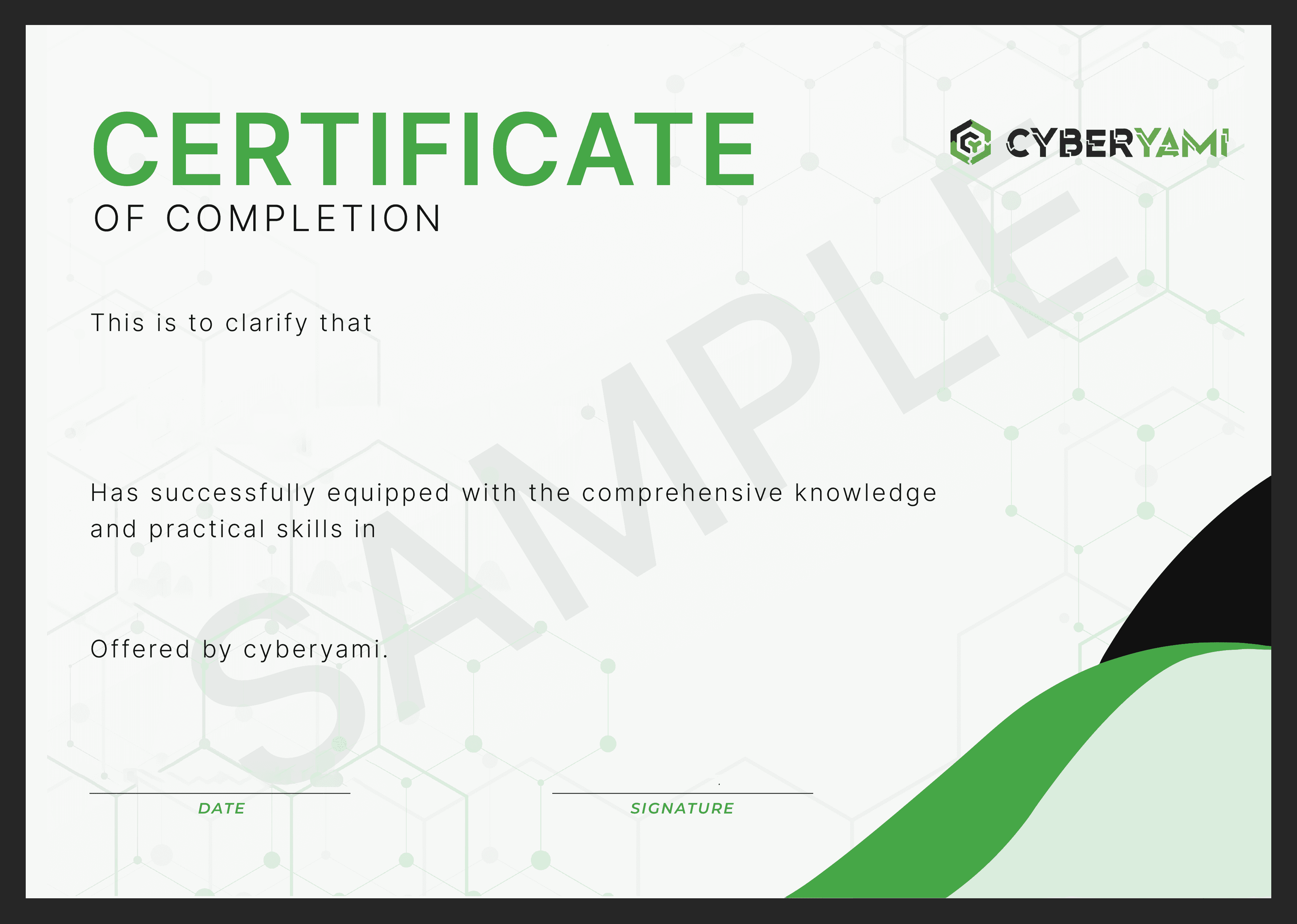
Secure your Completion Certificate
Attain your Completion Certificate and showcase your achievements on LinkedIn. Share your certificate with prospective employers and strengthen your professional network.
Related SkillUp Courses:
Start your 7 days free trial
Discover SkillUp courses for free with a 7-day trial. Access a variety of courses to enhance your skills and knowledge.