- malware analyst career path
What is Malware Analysis Process ?
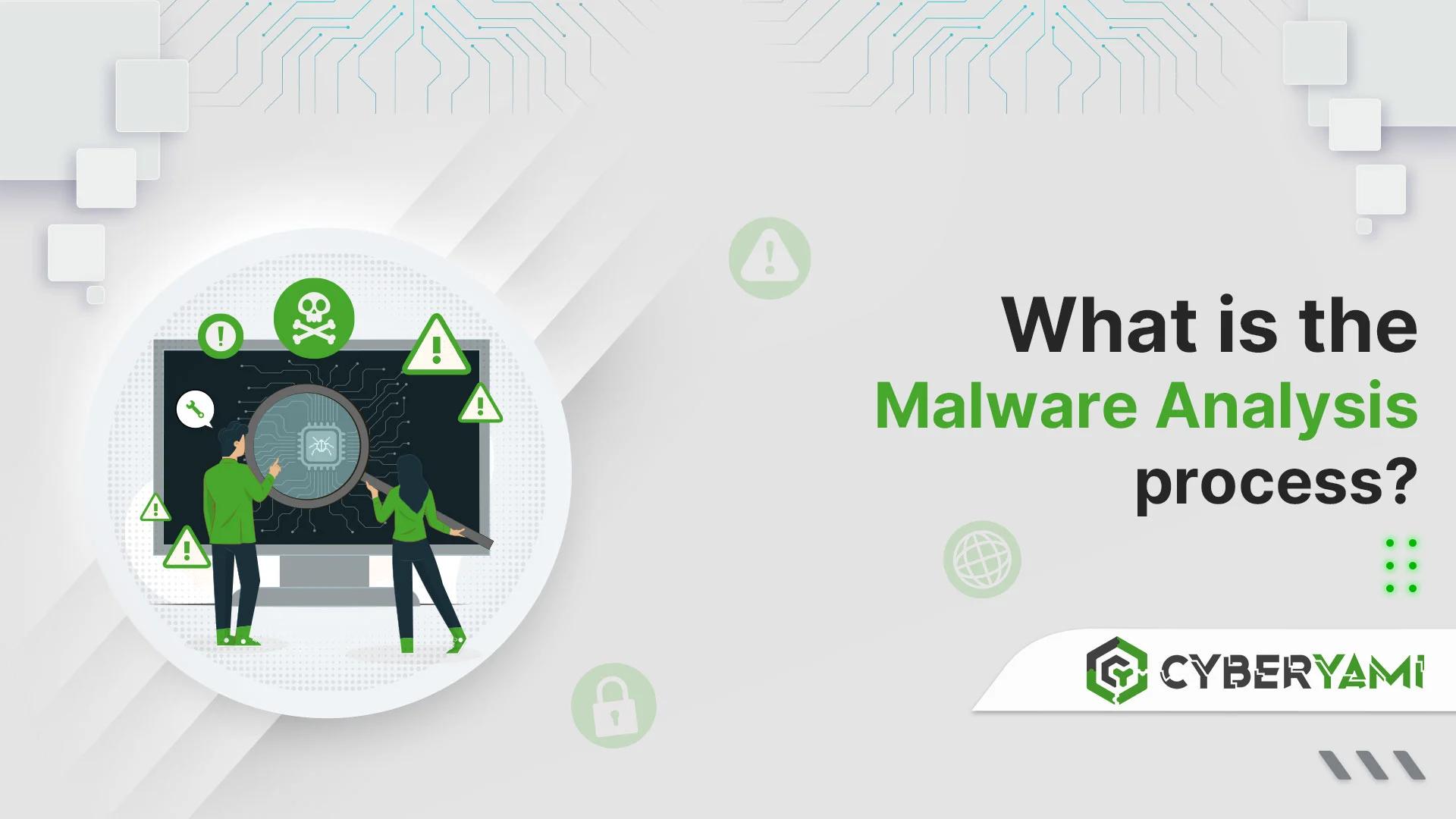
With cyber threats growing more sophisticated every year, malware — malicious software designed to compromise the security and privacy of computer systems — remains one of the most persistent risks organizations face. To combat it, cybersecurity experts rely on a structured discipline: malware analysis.
What Does the Malware Analysis Process Mean?
Malware analysis is the process of examining malicious software to understand its functionality, behavior, and potential impact. As attacks grow more complex — and increasingly, more automated — malware analysis has become one of the more specialized, high-demand corners of cybersecurity.
Benefits of Malware Analysis
- Threat Identification — classifying viruses, worms, Trojans, ransomware, and other threat types.
- Vulnerability Discovery — uncovering the software or OS flaws that malware actually exploits.
- Incident Response — understanding scope and impact during an active breach.
- Signature Creation — feeding antivirus and IDS systems with detection signatures.
- Threat Intelligence — contributing insight that the broader security community can act on.
- Enhanced Security Awareness — keeping defenders current on emerging threat techniques.
Types of Malware Analysis
- Static Analysis — examining malware without executing it: file attributes, code structure, hashing, and metadata.
- Dynamic Analysis — observing malware's behavior when executed in a sandboxed or virtualized environment.
- Hybrid Analysis — combining both approaches for a comprehensive view, particularly effective against advanced or evasive malware that behaves differently under observation.
One shift worth flagging for 2026: AI-generated and AI-obfuscated malware is now common enough that purely signature-based detection increasingly misses novel variants. (Intelligence, 2025) Behavioral (dynamic) analysis has become correspondingly more important — attackers can trivially change a file's static signature, but a piece of malware still has to *do* something to be malware, and that behavior is harder to disguise.
Stages of Malware Analysis
- Preparation — setting up sandboxes, VMs, and safe analysis environments.
- Data Collection — gathering context: the infected system, origin, and available metadata.
- Static Analysis — examining file attributes and known indicators of compromise.
- Dynamic Analysis — executing the sample in a controlled environment to observe behavior.
- Code Analysis — reverse engineering to understand inner workings and vulnerabilities.
- Behavior Analysis — documenting C2 communication, data exfiltration, and privilege escalation.
- Reverse Engineering — revealing how the malware was built and what obfuscation techniques it uses.
- Indicator Extraction — pulling IOCs (indicators of compromise) for detection and prevention.
- Reporting — a comprehensive report covering behavior, IOCs, and mitigation recommendations.
Malware Analysis Use Cases
- Incident Response — understanding the nature and scope of an active breach.
- Threat Intelligence — contributing insight on emerging attack vectors and adversary tactics.
- Signature Creation — powering IDS and antivirus detection.
- Vulnerability Discovery — informing patches and mitigations.
- Mandatory Reporting — meeting regulatory obligations in industries that require incident disclosure.
- Malware Classification — categorizing threats for faster future identification.
Tools for Malware Analysis
Static Analysis: PEiD, FileAlyzer, IDA Pro
Dynamic Analysis: Cuckoo Sandbox, Wireshark, ProcMon
Reverse Engineering: IDA Pro, OllyDbg, Ghidra (NSA's free, open-source reverse engineering tool)
Behavior Analysis: RegShot, RegMon, Wireshark
Indicator Extraction: YARA, MISP (Malware Information Sharing Platform & Threat Sharing)
Reporting: Standard documentation tools for compiling findings, IOCs, and recommendations.
The specific toolset varies by analyst preference, malware type, and analysis goals — but the underlying process above holds regardless of which tools you reach for.
Conclusion
Malware analysis remains a core discipline within cybersecurity, helping organizations and individuals defend against malicious software through a systematic, repeatable process. As threats keep evolving — especially with AI now involved in how malware gets built — malware analysis stays essential to modern cybersecurity practices.
Looking to build a career in this specialization? Read Malware Analysis Career Path: Becoming a Malware Analyst, or prep with our Malware Analyst Interview Questions & Answers.
Related Reads
- Malware Analysis Career Path: Becoming a Malware Analyst
- Best Malware Analysis Tools and Techniques
- Malware Analyst Interview Questions & Answers
- What is Digital Forensics? Types, Tools, and Techniques
References
Intelligence, M. T. (September 24, 2025). AI vs. AI: Detecting an AI-obfuscated phishing campaign. Microsoft Security Blog. https://www.microsoft.com/en-us/security/blog/2025/09/24/ai-vs-ai-detecting-an-ai-obfuscated-phishing-campaign/
Recent Blogs

How Encryption Algorithms Actually Work (Without the Math Headache)

Why Employee Awareness Training Is Your Cheapest Insurance Policy
From People to Processes: How Integrated Cybersecurity Training Platforms Elevate Organizational Readiness

Zero Trust for Beginners: Why "Trust No One" is Your Best Defense

Supply Chain Attacks: Protecting Your Business Ecosystem
Top 30 SOC Analyst Interview Questions and Answers for 2025

The Role of Certifications in Bridging the Cybersecurity Skills Gap

Why Every Business Needs Tailored Cybersecurity Training

Unveiling Lucrative Paths: Exploring Cybersecurity Career Opportunities